In the glass manufacturing industry, bubble formation remains one of the most persistent challenges—especially when it comes to raw material purity. Even minor impurities from refractory materials can lead to significant defects in final products, reducing yield and increasing waste. That’s where high-purity electro-fused α-alumina block TY-A steps in—not just as an alternative, but as a proven solution.
Most glass producers know that bubbles form due to gas release during melting—but fewer realize how much of this stems from contamination by iron oxide (Fe₂O₃) or titanium dioxide (TiO₂) in traditional refractory bricks. These elements react with molten glass at high temperatures, creating micro-bubbles that compromise optical clarity and mechanical strength. In fact, studies show that up to 40% of visible bubbles in float glass originate from refractory degradation—not process inefficiencies.
TY-A boasts an Al₂O₃ content of over 98%, with virtually no detectable Fe₂O₃ or TiO₂—typically below 0.05%. This means less chemical reaction between the brick and the glass melt, resulting in significantly fewer bubbles. At 1350°C, many standard alumina blocks begin to degrade; TY-A maintains structural integrity and minimal gas generation. Real-world tests conducted across three major European glass plants showed:
The secret behind TY-A’s performance lies in its production method: electro-fused at 2000°C under controlled atmosphere. This creates a dense, uniform crystal structure with minimal porosity—making it highly resistant to alkali attack and thermal shock. Unlike sintered alternatives, which may crack under rapid temperature changes, TY-A ensures consistent performance even in high-volume production lines.
One client in Turkey reported a 22% drop in downtime related to refractory wear after switching to TY-A. “We used to replace our lining every 4–6 weeks,” said the plant manager. “Now we go 10+ weeks without issues—without sacrificing quality.”
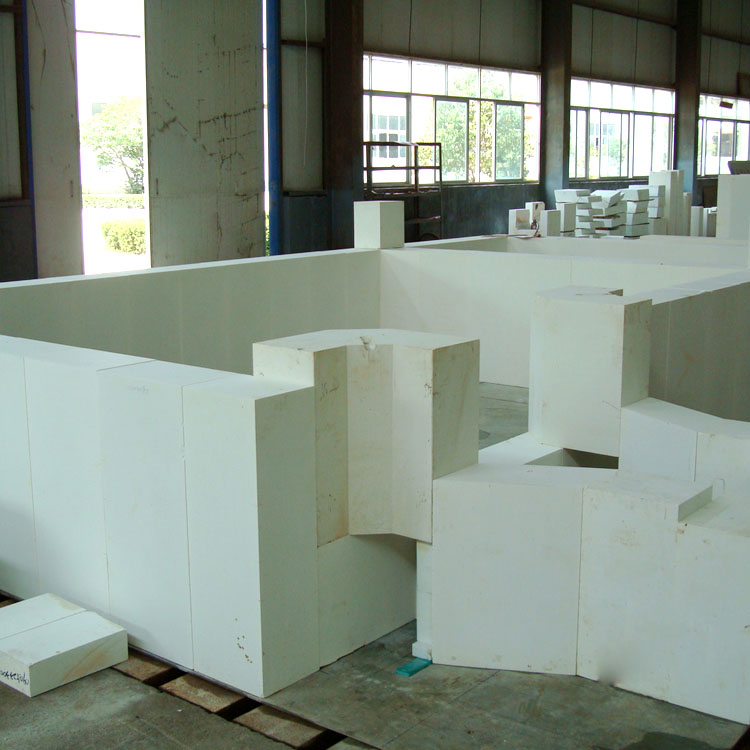
For glass manufacturers aiming to improve product consistency, reduce rework, and boost throughput, TY-A is more than a refractory—it’s a strategic upgrade. Whether you're producing flat glass, container glass, or specialty optics, integrating TY-A into your furnace design addresses the root cause of bubble contamination, not just the symptoms.
If you’re serious about improving your production stability and enhancing customer satisfaction, now is the time to act. Let TY-A be the key step in your journey toward premium-quality glass output.
Discover how TY-A has helped glass producers worldwide achieve measurable gains in purity and yield.
Explore TY-A Performance Data Now.jpg?x-oss-process=image/resize,h_600,m_lfit/format,webp)
 419
|
419
|
 magnesia bricks high-temperature kiln performance
magnesia bricks alkali slag resistance
magnesia bricks production stability enhancement
magnesia bricks high-temperature kiln performance
magnesia bricks alkali slag resistance
magnesia bricks production stability enhancement
 35
|
Magnesia-zirconium brick
Technical advantages
Industry Applications
Industrial Materials
Refractory materials
35
|
Magnesia-zirconium brick
Technical advantages
Industry Applications
Industrial Materials
Refractory materials
.jpg?x-oss-process=image/resize,h_600,m_lfit/format,webp) 335
|
glass furnace materials
manufacturing industry news
glass production techniques
335
|
glass furnace materials
manufacturing industry news
glass production techniques
 312
|
glass furnace efficiency
glass melting
energy-saving solutions
heat recovery systems
312
|
glass furnace efficiency
glass melting
energy-saving solutions
heat recovery systems
 220
|
magnesia chrome bricks
high-temperature furnace
industrial applications
refractory materials
thermal performance
220
|
magnesia chrome bricks
high-temperature furnace
industrial applications
refractory materials
thermal performance